
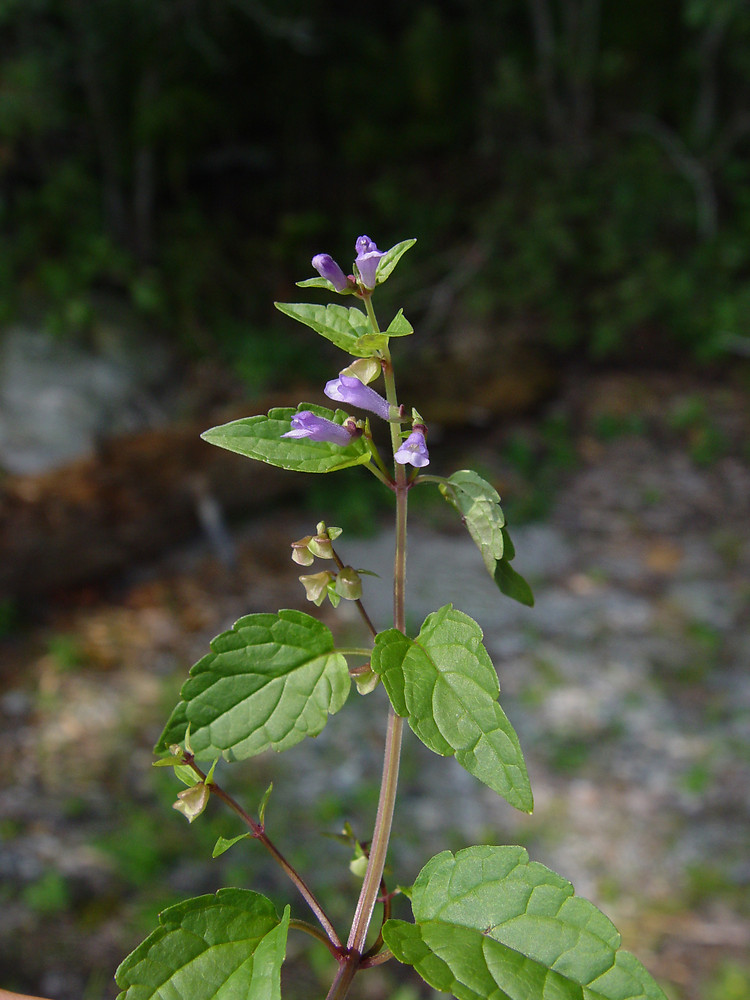
Scutellaria spp (common names: Skullcap) is “a sure treatment for almost any nervous system malfunction of a mild or chronic nature, from insomnia to fear to nervous or sick headaches, and as a basic palliative-restorative when pasturing out from stress” Michael Moore wrote in Medicinal Plants of the Mountain West, 2003 edition. When using skullcap to treat chronic nervous system or stress problems, it works best when we also stop eating refined sugar. Michael recommends combining skullcap with herbs that complement the specific problem being addressed such as with Betony for muscle pain or with Valerian or Vervain for insomnia. It is also helpful for withdrawal from drug and alcohol abuse.
This mint family herb grows widespread in the northern hemisphere. There are many species native to North America including the ‘official’ medicinal and easy to cultivate scutellaria laterifolia. Skullcaps love to grow near cool running water or moist crevices or meadow edges.
Michael observed that the most potent of our natives skullcaps is S. galericulata which has similar potency to the foliage of the Chinese skullcap S. baicalensis. Chinese Skullcap has been the subject of many clinical studies, some of which Michael summarized in the Research Abstracts section of the website.
Scutellaria spp, Skullcap
PART USED: Herb; above ground foliage
PREPARATIONS:
- Tincture [Fresh plant: 1:2, Recent Dry Plant, 1:5, 50% alcohol], 20-60 drops, up to 3X per day
- Standard Infusion of recent herb, 2-6 ounces, up to 3X per day. .
CONTRAINDICATIONS: none
CULTIVATION: Moist, rich soil with a fair amount of shade and consistent water. Propagates best with root cuttings. Very hardy once established.
You can also listen to Michael Moore talk about Skullcap from the field under the S section of the “Lectures in Botanical Materia Medica” or read about Scutellaria in Harvey Wickes Felter, M.D’s The Eclectic Materia Medica, Pharmacology and Therapeutics. Felter’s classic text from 1922 is presented in an abridged form (botanicals only), in sections based on first letter (the S section) , or as a single book as pdf files.
From Felters monograph on Scutellaria:
“Specific Indications.—Nervousness attending or following illness, or from mental or physical exhaustion, or teething; nervousness with muscular excitation; tremors; subsultus tendinum; hysteria, with inability to control muscular action; functional heart disorders of a purely nervous type, with intermittent pulse.”